1. Mastering the Visual Assessment: Color and Clarity
If you’ve ever walked into a liquor store and stared at a shelf of bourbon bottles, feeling a little lost about where to start, you’re not alone. The difference between a casual drinker and someone who genuinely enjoys bourbon isn’t about having expensive taste or pretentious credentials. It’s about learning to slow down and really experience what’s in the glass.
At CV Spirits, we’ve helped countless bourbon enthusiasts in the Cleveland area move past “I know what I like” to “I understand why I like it.” That shift changes everything. When you know how to taste bourbon properly, you unlock a whole world of flavor that most people miss entirely. You start noticing the subtle differences between allocations, you become confident in your preferences, and you actually enjoy your pour more because you’re paying attention to it.
Here are seven practical whiskey tasting techniques we recommend to help you discover your favorite bourbons.
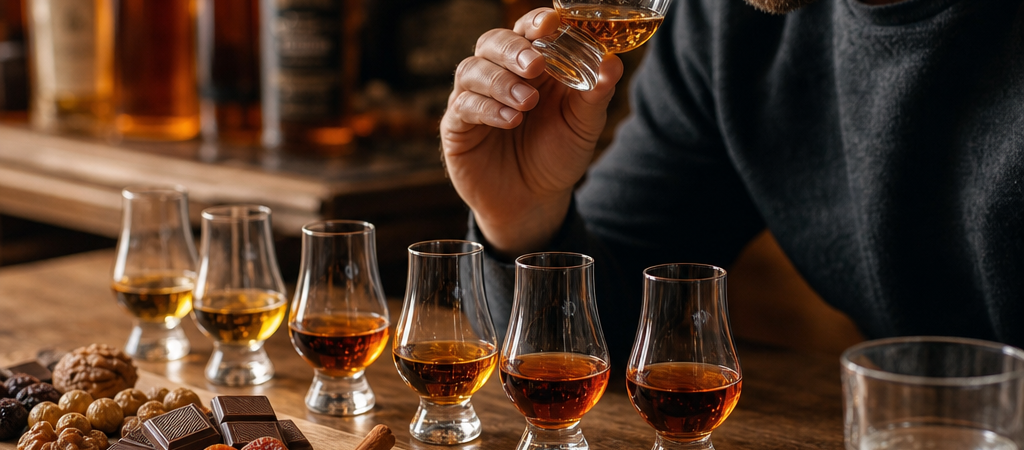
Before your lips ever touch the glass, your eyes are already gathering information. This isn’t about looking fancy or taking Instagram photos of your drink. The color and clarity of bourbon tell a real story about what’s inside.
Start by pouring a standard tasting measure, usually an ounce or so, into a clean glass. Hold it up to natural light or a neutral background. What you’re looking for first is clarity. A good bourbon should look transparent, not cloudy. If it appears hazy, that’s something worth noting (and worth asking about if you’re in our store in Warrensville Heights).
Now examine the actual color. Bourbon gets its hue from the barrel it ages in, so the shade can vary significantly. A lighter, golden color often suggests a younger bourbon or one aged in a newer barrel with less charring. A deeper amber or mahogany tone usually indicates longer aging or barrels with more pronounced char levels. Neither is better or worse, but the color sets expectations for what you might taste.
Pay attention to the “legs” or “tears” that form on the side of the glass as you tilt it. Those slow-moving droplets tell you about the bourbon’s viscosity and alcohol content. Thicker legs often mean higher proof and more body in the mouth. This is helpful context before you even taste.
What to do next: Keep your tasting notes simple at this stage. Write down one or two words describing the color (pale gold, deep amber, etc.) and whether the legs seem thick or thin. This trains your eye and gives you a baseline for comparison.
2. Developing Your Nose: The Art of Nosing
Here’s where most people go wrong. They either shove their nose directly into the glass and get a blast of alcohol that makes them recoil, or they don’t engage their sense of smell at all. Neither approach works.
Nosing is about letting your nasal passages do the heavy lifting of detecting aroma compounds. Start by holding the glass below your chin, a few inches away from your nose. Take gentle, deliberate breaths through your nose only, not your mouth. You’re trying to detect what’s floating off the surface of the bourbon without overwhelming your olfactory nerves.
The first sniff or two will often hit you with alcohol fumes, especially at cask strength or higher proof. That’s normal. Let your senses adjust. After a few natural breaths, the alcohol in the air clears a bit, and more subtle aromas emerge. You might catch vanilla, caramel, oak, grain, or fruit notes that weren’t apparent in that first aggressive sniff.
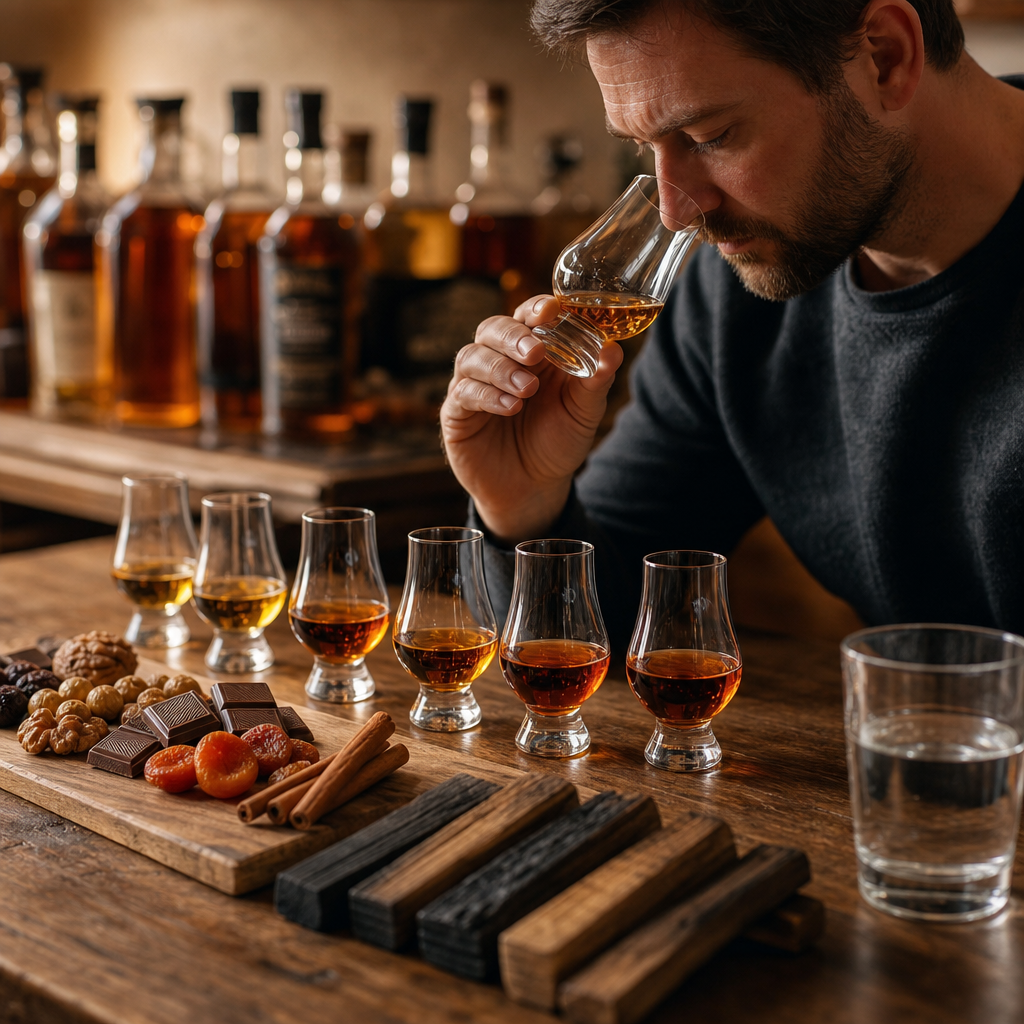
Many tasters use what’s called the “nosing technique” with a slight turn of the head. Rather than jamming the glass into your face, you angle it slightly and breathe across the rim instead of directly into it. This gives you a gentler introduction to the aromatics and often reveals more nuance.
Temperature matters too. A bourbon at room temperature will release more volatile aromatic compounds than a chilled one. If you’ve stored your bottle in a cooler area, let it warm up for a few minutes before nosing. The shift in aroma as it warms can be fascinating and actually helps you identify individual scent components.
What to do next: Practice nosing the same bourbon over the course of several minutes. Notice how the aroma evolves. Your first impression might be “oak and spice,” but after a minute of gentle nosing, you might detect “vanilla and dried fruit” underneath. That evolution is real, and learning to catch it separates casual drinkers from true enthusiasts.
3. Understanding Flavor Profiles: Building Your Sensory Vocabulary
This is the toughest part for many people, and honestly, it’s where we see folks struggle the most when they visit us. The challenge isn’t that bourbon is complicated, but that many people don’t have a reference framework for talking about what they’re tasting.
You need a sensory vocabulary. That means having actual tasting references in your memory. When a tasting note mentions “butterscotch,” you should be able to mentally reference actual butterscotch you’ve eaten. If someone describes “leather and tobacco,” you should have a sense of what that means on your palate.
Start building this vocabulary intentionally. Taste a bourbon and compare it to things you know. Does it remind you of honey, caramel, or toffee? Those are all different flavor experiences, even though they’re all in the “sweet” category. Does it have peppery heat or smooth spice warmth? There’s a difference. Does it taste like dried fruit, fresh fruit, or fruit candy?
The common bourbon tasting categories include:
- Vanilla and caramel (barrel-derived sweetness)
- Oak and woodiness (aging characteristics)
- Spice and pepper (grain and barrel interaction)
- Fruit notes like cherry, apple, or pear
- Grain flavors such as corn sweetness or rye spice
- Leather, tobacco, and earthy tones
- Baking spice like cinnamon and nutmeg
When you’re building your sensory vocabulary, don’t worry about being “right.” There’s no official bourbon flavor police. Your job is to develop consistent personal reference points so you can compare bourbons and understand your own preferences. If a bourbon reminds you of cinnamon toast, write that down. That’s as valid as any industry descriptor.
What to do next: Grab two bourbons you haven’t tried before and taste them back-to-back. Don’t overthink it. Just describe what you taste in everyday language. “Tastes like vanilla cake” beats “exhibits notes of Madagascar vanilla and caramelized sugar” every single time. Your brain needs these concrete anchors.
4. The Palate Phase: Tasting Like a Pro
Now we’re getting to the actual tasting, and this is where technique really matters. How you taste bourbon dramatically changes what you perceive.
Take a small sip, maybe a quarter-ounce. Don’t swallow immediately. This is crucial. Let the bourbon coat your mouth, especially your tongue and the sides of your mouth where taste receptors are concentrated. You want the liquid to interact with your palate for a few seconds. This is called the “palate phase,” and it’s where most of the flavor action happens.
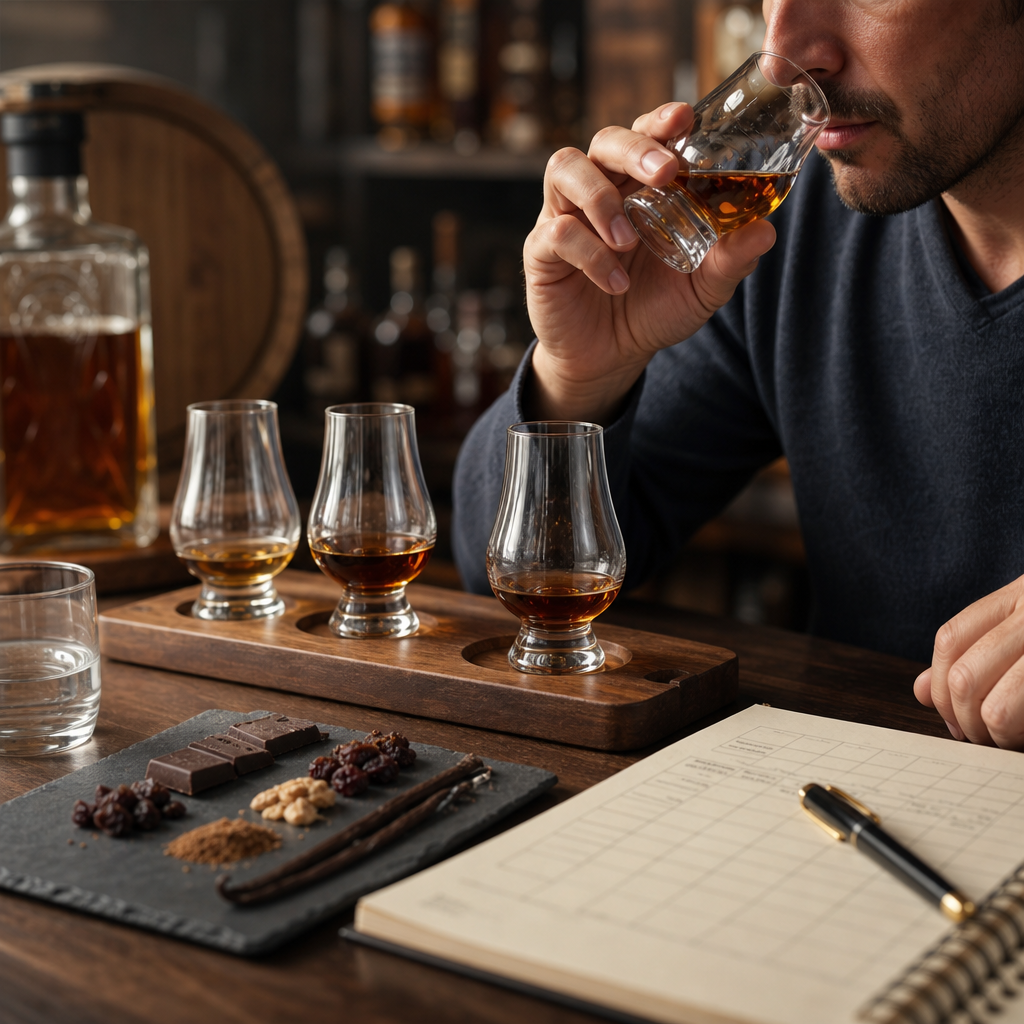
Many experienced tasters add a tiny bit of water to their bourbon before tasting. This isn’t cheating or diluting the experience. It’s actually a pro move. A bit of water can open up the bourbon, releasing compounds that were tightly bound at higher proof. If you’re tasting a 120-proof bourbon, a few drops of water can genuinely reveal flavors that the higher alcohol was masking. We recommend using water at room temperature, not ice-cold.
Pay attention to the progression of flavors on your palate. The initial taste might be sweet, but as the bourbon sits in your mouth, other flavors emerge. You might notice heat building in your throat. You might detect spice that wasn’t apparent in the first second. The finish, that lingering taste after you swallow, is often the most interesting part and reveals wood and oak character.
One valuable technique is to “chew” the bourbon slightly. This isn’t literal chewing, but rather allowing the liquid to move around your mouth as if you were mouthing solid food. This increases surface area contact and helps your palate detect more nuance. It sounds strange, but it works.
Temperature of the bourbon matters at the tasting stage too. Most bourbons are best tasted at room temperature or slightly chilled, never ice-cold. Cold mutes flavor perception. That’s fine if you’re making a cocktail, but for tasting, you want the bourbon warm enough to express itself fully.
What to do next: Take a bourbon you already like and taste it using the palate technique we’ve described. Slow down the process. Let each sip sit in your mouth for five to ten seconds before swallowing. Notice how much more flavor detail emerges compared to your typical pour-and-drink experience.
5. Identifying Wood and Oak Characteristics in Bourbon
Oak is the foundation of bourbon flavor, and understanding barrel characteristics opens up a whole new dimension of tasting.
All bourbon in the United States, by law, must be aged in new charred oak barrels. The type of oak, the level of char, the previous use of the barrel, and how long the bourbon sits in it all influence what you taste. This is why two bourbons from different distilleries, even if they’re the same proof and age, can taste dramatically different.
Look for oak flavors in your tasting notes. These typically manifest as toasted wood, sawdust, spicy oak, or even wet wood character. The intensity tells you something about aging. A bourbon with subtle oak notes might be relatively young or aged in a lighter-charred barrel. A bourbon where oak really dominates might have spent significant time in the barrel or been aged in heavily charred casks.
The char level inside the barrel creates different flavor profiles. Heavy char can impart more caramel and toffee sweetness because the charring process breaks down wood compounds into simpler sugars. Light char allows more tannins to develop, which can give you that slightly astringent, mouth-puckering sensation you sometimes get at the end of a sip. Neither is wrong, but they’re distinctly different experiences.
The barrel toast also matters. Toast is the controlled heating of the wood before charring, and it creates different compounds than the char does. A medium toast might give you more vanilla and spice, while heavy toast brings out deeper, roasted wood flavors. Most people can’t distinguish these factors perfectly, and that’s fine. You just need to recognize that oak character varies and start noticing the difference between subtle oak and aggressive oak.
When you’re at our tasting events or chatting with our staff at CV Spirits, don’t hesitate to ask about the barrel characteristics of a bourbon you’re trying. We love talking about this stuff, and understanding how barrel aging shaped a bourbon you’re tasting makes the experience richer.
What to do next: Compare a wheated bourbon (one made with wheat instead of rye as the secondary grain) with a high-rye bourbon. The grain bill affects how oak plays in the final flavor, and this comparison will teach you how grain and barrel interact. You’ll start developing an ear for these nuances.
6. Recognizing Spice, Fruit, and Vanilla Notes
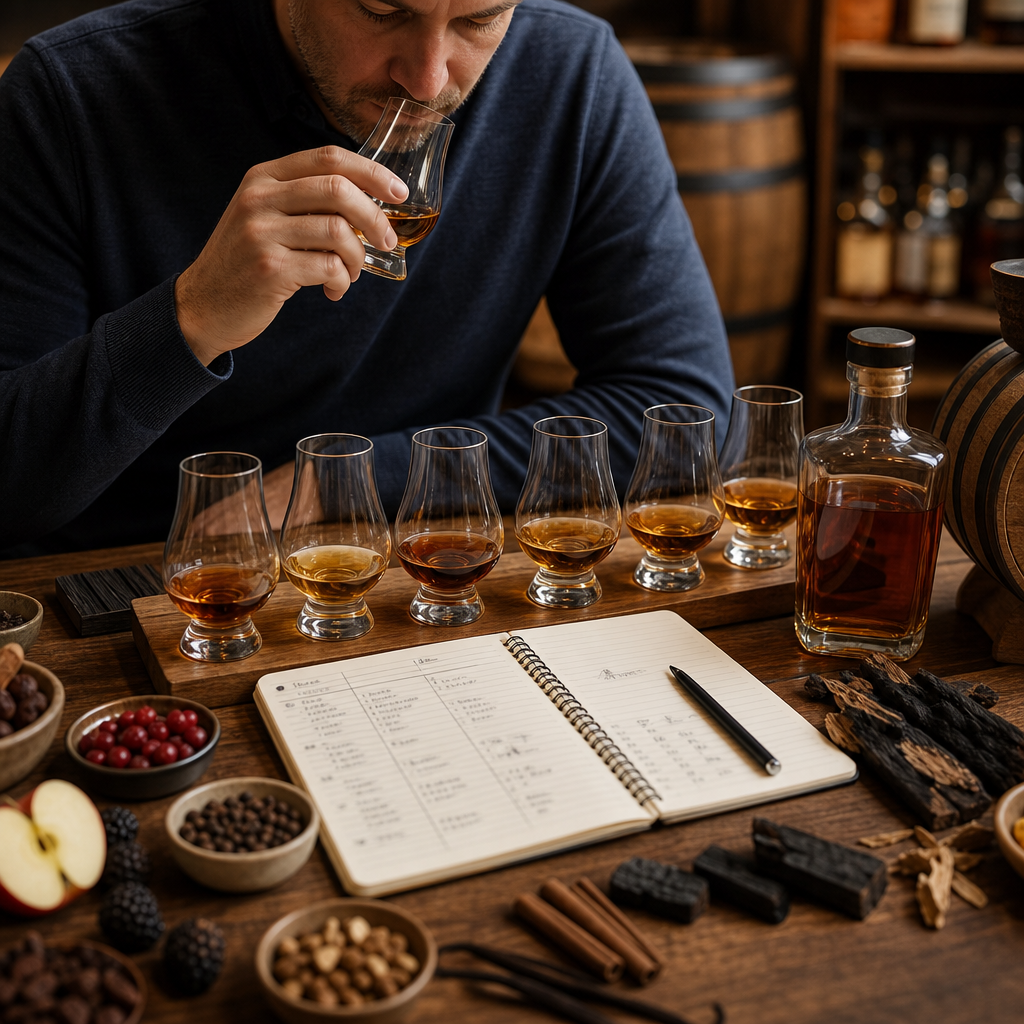
These three flavor categories probably account for 80 percent of what you’ll experience in most bourbons, so getting comfortable identifying them is essential.
Vanilla is the most straightforward. It comes directly from the wood of the barrel, where vanillin is a naturally occurring compound. When you taste vanilla in bourbon, you’re often tasting it alongside caramel or other sweet notes because those develop together during aging. The vanilla character can range from delicate and creamy to bold and almost perfumy. High-proof bourbons sometimes express vanilla more assertively than their lower-proof counterparts.
Spice in bourbon usually comes from rye, the secondary grain in many bourbon recipes. Look for pepper (black, white, or red), cinnamon, nutmeg, clove, or ginger notes. These are warming, sometimes slightly sharp sensations on your palate. Spice can also come from the barrel itself, particularly if the oak has been toasted heavily. The difference between grain-derived spice and wood-derived spice is subtle, and you don’t need to distinguish them perfectly. You just need to recognize spice when you taste it and note how much heat or intensity it brings.
Fruit notes are where people often second-guess themselves. “Is that apple or pear? Cherry or plum?” The honest answer is that sometimes it’s hard to tell, and that’s okay. The key is recognizing that there’s a fruity character present. Is it bright and citrusy, or dark and jammy? Is it reminiscent of dried fruit or fresh fruit? Those distinctions matter more than pinpointing the exact fruit. Some bourbons lean heavily into fruit because of their grain bills, their yeast strains, or their barrel history. Others barely hint at fruit at all.
A practical approach: when you notice fruit, spice, or vanilla in a bourbon, ask yourself simple follow-up questions. Is the vanilla more “cake frosting” or “wood shavings”? Is the spice more “black pepper” or “cinnamon sugar”? Is the fruit more “cherry pie filling” or “fresh apple”? These distinctions help you build your personal tasting vocabulary and make comparisons across different bourbons more meaningful.
What to do next: Taste three bourbons specifically looking for vanilla, spice, and fruit in each one. Rate each element on a simple scale (subtle, moderate, bold). You’ll start seeing patterns in how different distilleries and recipes express these core flavors.
7. Creating Your Personal Tasting Notes and Preferences
The real value of learning whiskey tasting techniques isn’t just enjoying bourbon more in the moment. It’s building a personal reference library so you can make better purchasing decisions and discover new favorites confidently.
We recommend keeping a tasting journal, either digital or physical. It doesn’t need to be fancy. You’re just creating a record of bourbons you’ve tried, what you tasted, how you felt about them, and whether you’d buy them again. Here’s a simple format that works well:
- Bourbon name and distillery
- Proof and age (if available)
- Color (brief description)
- Nose (2-3 aroma notes)
- Palate (3-4 flavor notes and how they progress)
- Finish (character and length)
- Overall impression (score if you want, or just “loved it,” “pretty good,” “pass”)
Over time, patterns will emerge. You might realize you consistently prefer higher-proof bourbons with spicy character. Or you might discover you gravitate toward wheated bourbons with pronounced vanilla and caramel. These preferences aren’t good or bad, they’re just data about you. And when you know them, shopping for bourbon becomes strategic instead of random.
Your tasting notes are also incredibly useful when you’re talking to knowledgeable staff at your local spirits shop. Instead of saying, “I like bourbon,” you can say, “I loved that wheated bourbon with the vanilla and caramel, but it wasn’t spicy enough for my taste.” That specificity helps someone recommend something you’ll actually love.
One more tip: revisit bourbons you’ve already tasted. Your palate develops as you taste more, and a bourbon you didn’t connect with a year ago might surprise you now. Your tasting notes from that earlier experience become your baseline for comparison.
We’ve spent years helping East Cleveland and Warrensville Heights bourbon enthusiasts build their tasting skills and discover allocated bottles they love. Whether you’re tasting for the first time or refining your palate, our staff is here to guide you. Visit our bourbon tasting blog for more education and recommendations, or stop by CV Spirits to talk through what you’re looking for. We stock allocated bourbon drops, rare finds, and everyday favorites. Our team knows these spirits intimately, and we’re genuinely excited to help you discover what speaks to you.